Grading rubric

A grade you can argue with.

Every listing on AssetDelta carries a letter and a percentage. This page is the rule they were awarded under: what evidence each grade requires, what the model reads out of each of the 8 photographs, how the confidence figure is arithmetically built — and, because it is the part that makes the rest worth anything, what the report cannot see at all.

A grade with no stated method and no confidence figure is an opinion with a letter on it. Read this before you trust any grade, including ours.

At a glance

Summary of the AssetDelta grading method
GradesA · B · C · D
Photo angles8, nameplate blocking
Dimensions scored7
Grade isMean of the 7 scores
Confidence is50 photos + 30 invoices + 20 hours
Powered onNever

The grade is what the unit is. The confidence is how much of it we could actually see.

What this report does not cover

Six things a photograph cannot reach.

Nobody can inspect a boiler through a photograph. A report that implies otherwise is worth nothing, so this one states its blind spots in the same place it states its findings — and it does so on every listing, where it cannot be collapsed or removed.

The floor

Give the scorer everything — all 8 angles, an invoice for every year of the unit’s life, an independently verified hour meter, nothing that failed to extract. Confidence goes to 100%. The report still declares 1 gap, and there is no evidence a seller can supply that removes it:

The unit was not powered on or tested under load during assessment — condition is inferred from photographs and documents only.

  1. The unit is not powered on

    Every unit assessed here has already been disconnected. It is not switched on, not run, not heated, not chilled and not put under load at any point in the assessment. Nothing in the report is a test result.

    Ask for insteadAn electrical safety test certificate dated within the last twelve months, or a Verified Inspection where an inspector attends and powers the unit.

  2. Boiler scale and heat-exchanger condition

    On a combi oven this is most of the value and none of it is on the outside. Limescale in the steam generator and pinholes in the heat exchanger are sealed inside the machine. A unit descaled twice a year and a unit that has never been descaled make the same photograph.

    Ask for insteadThe descale log or CalcDiagnosis history, and dated service invoices. A combi with no service file should be priced as though this fault is present.

  3. Compressor health and refrigerant charge

    A refrigeration compressor with five years of duty against a hot service line looks identical to one that sat in a cellar. Charge level cannot be read from a photograph, and neither can a slow leak at a joint.

    Ask for insteadAn F-Gas or R290 leak-check record dated within the last eighteen months, plus the ambient the cabinet actually ran in.

  4. Running hours

    On club cardio, hours predict motor and bearing life more reliably than anything visible in a frame, and two machines of the same year can be three thousand hours apart. The number lives on the console service screen, and the console is not powered.

    Ask for insteadA photograph of the hours screen with the machine switched on, or an hour-meter reading taken and signed by an inspector.

  5. Anything behind a panel

    Control boards, wiring looms, bearings, pumps, motor windings, element condition and hydraulic internals are all unassessed. The assessment does not open the machine, and a resprayed or replaced panel can hide impact damage behind it.

    Ask for insteadA service report from an engineer who has had the covers off, and the part numbers of anything replaced.

  6. Water, gas and waste under pressure

    No soundness test is carried out. Waterline biofilm in a dental chair, a gas joint that weeps at working pressure, a seal that holds cold but not at temperature — none of these appear until the unit is connected and running.

    Ask for insteadA Gas Safe soundness certificate, the last waterline shock-treatment record, or a commissioning report from the new site.

This same list, computed for the specific unit in front of you, is the “What we don’t know” panel on every listing. It is not collapsible there either.

The rubric

Four grades, read off the patina of aging metal.

The scale is the corrosion sequence of the metal itself — verdigris, steel, brass, rust. Each record below shows the rule, a photograph of a real unit with the regions the scorer read marked on it, and what the grade does to the asking price.

The same oven at four grades

Suggested asking price for the reference oven at each grade
GradeMultiplierSuggested
Grade A. Serviced, near-new.×1.05$13,138
Grade B. Sound, working.×1.00$12,512
Grade C. Worn, functional.×0.85$10,635
Grade D. Parts or refurb only.×0.65$8,133

Rational SCC WE 61, 2022, $18,400 new, 4 years old. Catalogue price against the depreciation curve and the grade multiplier, before comparable sales are applied. A letter is worth $5,005 on this machine, which is why the rule for awarding it is published.

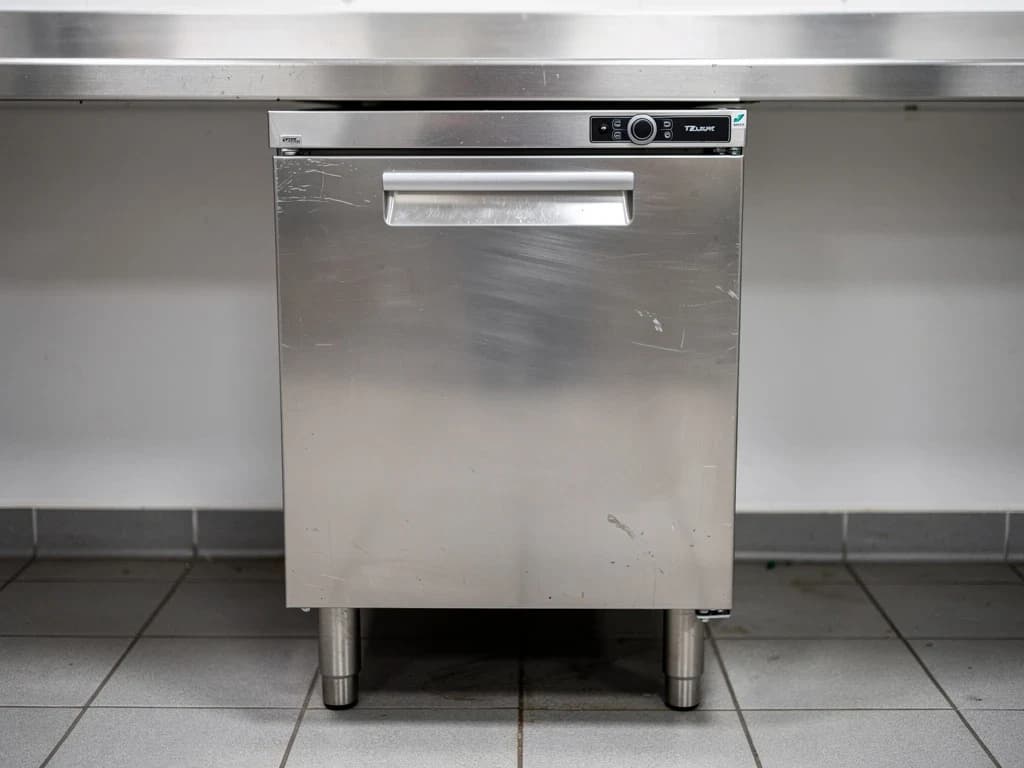
Foster EcoPro G3 stainless undercounter refrigerator, two doors, photographed straight on against a tiled kitchen wall.Foster EcoPro G3 · 2021
Front angle, straight on. Under-bench install, unit still connected at capture.
  1. Marker 1. Controls and electronicsControl fascia and dial complete, legends unworn, no aftermarket switchgear.
  2. Marker 2. CosmeticDoor face carries light handling scuffs only. No dents, no distortion at the edges.
  3. Marker 3. CorrosionFeet present, threads straight, no corrosion at the floor line.
Grade A. Serviced, near-new.Verdigris

Serviced, near-new.

In service until de-installation, with a maintenance record covering every year of the unit's life. Cosmetic wear only, and nothing on the unit that a buyer would need to put right before using it.

Evidence required

  • All eight photo angles, with the nameplate legible at full resolution
  • Service invoices covering every year since purchase, no gap longer than fourteen months
  • No dimension scoring below 8 out of 10
  • Seals, gaskets and door furniture intact and correctly seated in the photographs
  • No corrosion, no impact damage, no missing panels, racks or feet

What takes it out of this grade

  • Any year of the unit's life with no service record on file
  • Any dimension below 8
  • Any visible corrosion, however light
How grade A was worked out for the example unit, and what it does to the asking price
Awarded when8.5 and aboveMean of the seven dimension scores.
This unit scored9.1 → grade A
Report confidence80%
Declared gaps2The unit was not powered on or tested under load during assessment — condition is inferred from photographs and documents only.
Effect on price×1.05$13,138 for the reference oven — a 2022 Rational SCC WE 61, four years old, $18,400 new.

Open the live listing this example came from

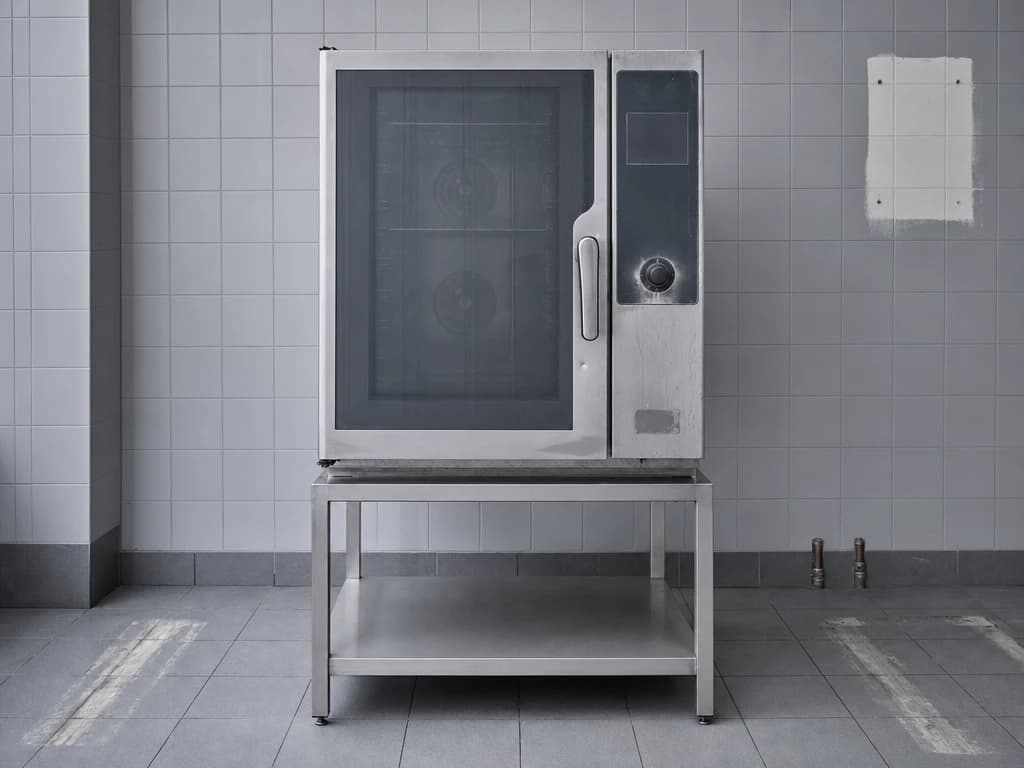
Rational SelfCookingCenter WE 61 combi oven, stainless front, door closed, photographed straight on in a stripped commercial kitchen.Rational SCC WE 61 · 2022
Front angle, straight on. De-installed and standing on its original stand.
  1. Marker 1. Cavity and interiorCavity glass clear, shelf runners straight, door glass unmarked.
  2. Marker 2. Controls and electronicsCondensate staining streaked down the control fascia. Keypad and dial intact.
  3. Marker 3. CorrosionScale crusted along the base seam where the unit meets the stand. Declared as a known fault.
Grade B. Sound, working.Steel

Sound, working.

In working order at de-installation, with wear consistent with its age. Either the service history has gaps, or there are faults visible in the photographs — and in that case the report names them and so does the listing.

Evidence required

  • All eight photo angles
  • At least one service invoice, with coverage across the majority of the unit's life
  • No dimension scoring below 6 out of 10
  • Every fault visible in a photograph named in the report and in the listing's known faults

What takes it out of this grade

  • A fault visible in a photograph that the listing does not declare
  • Any dimension below 6
  • Scale or corrosion that has broken the surface of the metal
How grade B was worked out for the example unit, and what it does to the asking price
Awarded when6.5 to 8.4Mean of the seven dimension scores.
This unit scored7.6 → grade B
Report confidence80%
Declared gaps2The unit was not powered on or tested under load during assessment — condition is inferred from photographs and documents only.
Effect on price×1.00$12,512 for the reference oven — a 2022 Rational SCC WE 61, four years old, $18,400 new.

Open the live listing this example came from

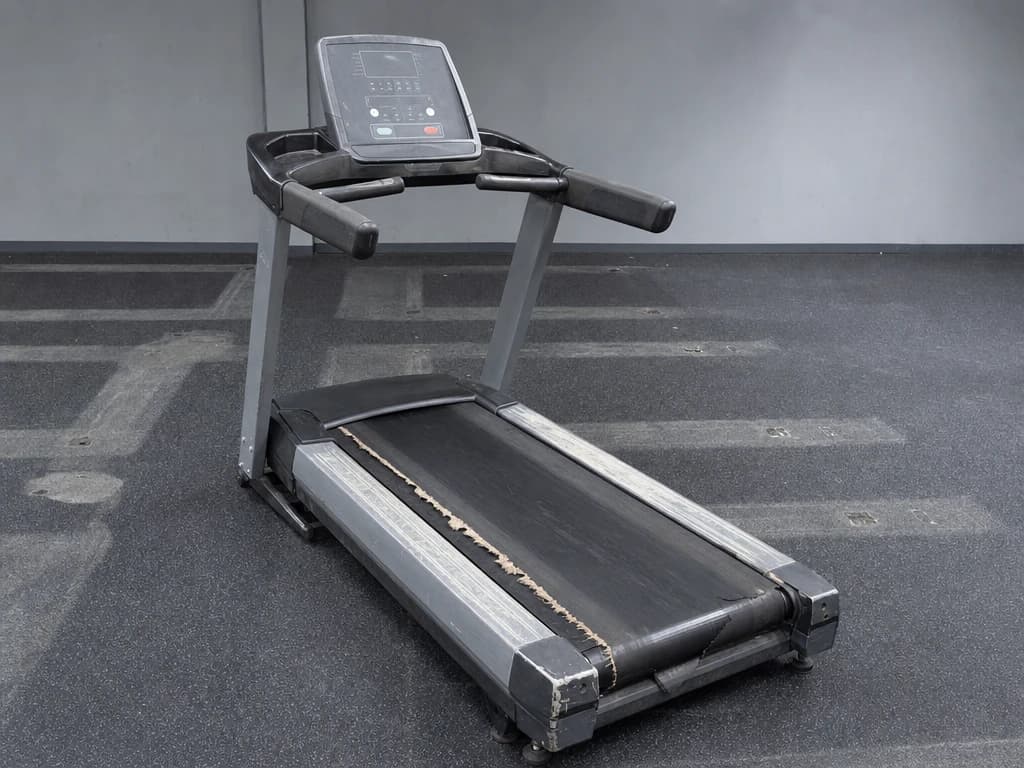
Life Fitness Integrity Series treadmill on a stripped gym floor, console dark, side rails scuffed.Life Fitness Integrity Series · 2020
Three-quarter angle from the deck. Unplugged, standing on the gym floor.
  1. Marker 1. Controls and electronicsConsole and keypad complete. Nothing is powered, so the display itself is unverified.
  2. Marker 2. Moving partsRunning belt split across its full width. Belt and deck replacement required before use.
  3. Marker 3. CosmeticRear roller shroud cracked, paint gone at the corner. Cosmetic, not structural.
Grade C. Worn, functional.Brass

Worn, functional.

Wear that a buyer will have to put right: perished seals, split belts, cracked shrouds, heavy scale. Priced for someone who intends to repair it, and every fault is photographed close enough to price the part.

Evidence required

  • All eight photo angles, plus a close crop of every declared fault
  • No dimension scoring below 4 out of 10
  • Each fault named with the part required, where the part is identifiable from the photograph

What takes it out of this grade

  • Any dimension below 4
  • A structural or safety fault of any kind
  • A fault the seller declines to photograph
How grade C was worked out for the example unit, and what it does to the asking price
Awarded when4 to 6.4Mean of the seven dimension scores.
This unit scored5.3 → grade C
Report confidence65%
Declared gaps3The unit was not powered on or tested under load during assessment — condition is inferred from photographs and documents only.
Effect on price×0.85$10,635 for the reference oven — a 2022 Rational SCC WE 61, four years old, $18,400 new.

Open the live listing this example came from

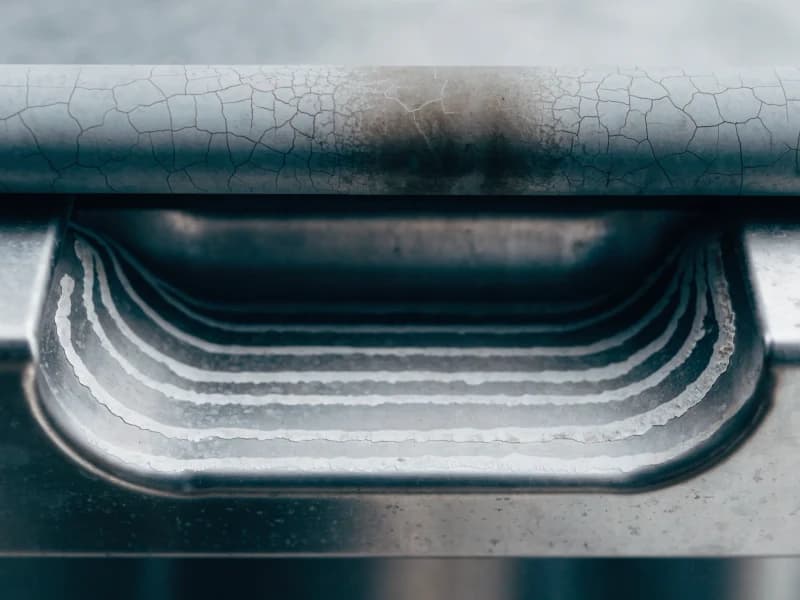
Close crop of a commercial oven door seal: the grey rubber gasket crazed and stiffened with age above hard white limescale tide rings dried into the stainless rebate below.Rational SCC 61 · 2013
Door-seals angle, detail crop. This is one of the eight, shown at the scale the model reads it.
  1. Marker 1. Seals and gasketsSeal face crazed through its full length. The material has gone stiff and no longer returns.
  2. Marker 2. CorrosionFive limescale waterlines dried into the stainless rebate.
Grade D. Parts or refurb only.Rust

Parts or refurbishment only.

Not fit to be put back into service as it stands. Sold for components, or to a refurbisher who will strip and rebuild it. The listing has to say which of the two it is.

Evidence required

  • All eight photo angles
  • The failed component photographed directly, close enough to identify it
  • A written statement of what the unit is being sold for: parts, refurbishment, or the scrap value of the frame

What takes it out of this grade

  • Asbestos-containing insulation — the unit cannot be listed at all
  • A gas appliance that has failed a soundness test
  • Any unit that cannot be safely de-installed from where it stands
How grade D was worked out for the example unit, and what it does to the asking price
Awarded whenbelow 4Mean of the seven dimension scores.
This unit scored2.9 → grade D
Report confidence50%
Declared gaps3The unit was not powered on or tested under load during assessment — condition is inferred from photographs and documents only.
Effect on price×0.65$8,133 for the reference oven — a 2022 Rational SCC WE 61, four years old, $18,400 new.

Nothing on the site is graded D today, so this example is a detail crop rather than a live listing. A grade-D unit is listed for parts or for refurbishment, and the listing has to say which of the two it is.

What the model checks

7 dimensions, each scored out of 10.

The photographs are read for these 7 things and nothing else. Each row names which of the 8 angles it is read from, what it can establish there, and where it stops — the right-hand column is not a caveat, it is part of the specification.

Scroll the table sideways for the fourth column

The seven scored dimensions, the photo angles each is read from, and what each cannot establish
DimensionRead fromWhat it scoresWhat it cannot establish
CosmeticFront, Controls, AccessoriesPanel dents, fascia scratches, worn legends, missing badges and trim.Whether a replaced or resprayed panel is hiding impact damage behind it.
CorrosionRear connections, Underside and feet, FrontSurface rust, pitting, scale breakout, staining along weld lines and the floor line.Corrosion inside a sealed cavity, a boiler, or anywhere in the water circuit.
Seals and gasketsDoor seals, Interior cavityGasket crazing, compression set, tears, and how the seal sits at the corners.Whether the door still closes to a seal at temperature and under pressure.
Controls and electronicsControls, NameplateDisplay damage, missing keys, worn legends, aftermarket switches, cut looms.Whether the board, the probes or the software work. Nothing is powered during assessment.
Cavity and interiorInterior cavityScale, carbon, staining, shelf-runner distortion, missing racks and trays.Boiler scale, heat-exchanger condition, anything behind the cavity wall.
Moving partsFront, Underside and feet, AccessoriesBelt splits, castor and hinge wear, drawer travel, fan-guard and shroud damage.Bearing noise, motor hours, and drive-train wear — all of it audible only under load.
CompletenessAll eight anglesRacks, trays, hoses, keys, feet, filters and manuals present in the frame.Whether a part that was never photographed is actually on site.

Every finding is written against the photo region it was read from, and on a listing that region is a link — the finding and the pixels that produced it are never more than one click apart.

Confidence

Why a report says 78%.

Confidence is not a feeling about the grade. It is the proportion of the evidence the method asks for that was actually supplied, weighted: 50 points for photo coverage, 30 for invoice coverage across the unit’s life, 20 for an independently verified hour meter, less 5 for every uploaded invoice that could not be read.

The worked example

A 2013 Winterhalter UC-M warewash machine on a long-running service contract. Every angle photographed, 12 of 13 years invoiced — 2014 is the missing year — and an hour meter nobody has independently read. That is grade B at 78%.

Change the evidence below and the figure moves. It is the same function that scored every listing on the site, not a demonstration of one.

Evidence on file

Winterhalter UC-M · 2013 · UCM-13-08822

Photo angles supplied

Struck-through angles were not supplied. The nameplate angle is blocking on a real listing — a unit cannot be published without it.

Service invoice years on file

12 / 13

The unit is 13 years old, so 13 years of cover is the ceiling. 2014 is the year missing from this contract.

Invoices that could not be read

0

An invoice that will not extract is recorded as a failure and costs 5 points. It is never dropped and never assumed clean.

The record, year by year

20142026

A filled cell is a year with a service invoice on file. A dashed one is a year nobody can account for, and it is scored as unknown rather than assumed clean — which is why invoice coverage contributes +28 of a possible +30 here.

Confidence

78%

Grade B · 78%
How the confidence figure for this report is made up
ComponentContributes
Photo coverage8 of 8 angles+50of +50
Invoice coverage12 of 13 years+28of +30
Running hoursAs stated by the seller+0of +20
Unreadable invoices0 invoices+0of -5
Confidence78%

What would raise it

  • Have the hour meter read and independently verified+20
  • Supply the missing invoice years+2

Declared gaps (3)

  • not_powered_testedThe unit was not powered on or tested under load during assessment — condition is inferred from photographs and documents only.
  • missing_invoice_yearsNo service invoice on file for 1 of the last 13 years of the unit's life.
  • unverified_running_hoursRunning hours are not independently verified — as stated by the seller only.

Evidence moves the confidence figure, never the grade. The grade is the mean of the seven dimension scores, fixed at 7.0 for this unit — which is why a complete photo set on a worn machine still reads B.

Verified Inspection

When the photographs are not enough.

Every limit on this page comes from the same root: the unit is documented, not tested. An inspection is how a seller buys their way past that. An engineer attends the site, powers the unit, and signs a grade.

Verified Inspection fee
Fee$185.00
Each extra unit$95.00
ChargedStated before you book, deducted from the payout
ResultSigned grade replaces the computed one on the listing
  1. The unit is powered on

    The inspector connects it, runs it, and records what it does. Every finding in the report that says 'not assessable without power' gets an answer.

  2. The hour meter is read

    Photographed on the console with the machine running, and signed. It stops being a figure the seller remembers and starts being evidence.

  3. The covers come off

    Condenser deck, motor housing, terminal block, hydraulic column. The parts the eight angles are not allowed to reach.

  4. The grade is signed

    The inspector's grade replaces the computed one on the listing, with their name and the date of attendance beside it. If they disagree with the model, their letter is the one that publishes.

An inspection does not make a worn machine a good one. It moves the confidence figure and it settles the arguments the camera could not — which, on a unit the seller had serviced last month and the model still put at grade C, is usually the whole disagreement.

Now read one for real.

Every listing carries the report this rubric describes: the grade, the confidence figure, the per-dimension findings linked to the photographs they came from, and the gaps panel that names what none of it could reach.